Saturday, February 10, 2018


Sometimes it's  hard to accept where you find yourself in life, particularly when you think you can improve your situation.

Especially when you know you're entirely responsible for your current circumstances and had you been just a little  more disciplined, observant, careful or whatever, your undesirable experiences could have been avoided.

Of course hindsight is always 20/20 and your inner critic is always ready to point out what you "shoulduh, woulduh, coulduh"done.

It's at these moments when we must be ever so diligent not to heed the chronic, incessant, bully residing in our heads but to remember the hero that we've had to be in order to reach this point in our lives.

I mean, heck, we have to be doing something right. We're still here and let's face it, not everyone  can say that.

Instead of lamenting what we think should be, I like to remember how great everything is simply because I'm still here to see it and be part of whatever "it" is.

Yes, I may not be perfect and I may make mistakes but I'm a work in progress and consider everyday  an opportunity to enjoy my journey.


Thursday, October 6, 2016


LOSING WHAT WE LOVE

 Is it really better to have loved and lost than never to have loved at all or is that just a quaint little saying that someone came up with to make your loss easier to bare? It seems the more I lose the things I love, the more I feel cheated and angry with the universe. With each loss I'd like to believe it makes me more empathetic when others have similar experiences but at the same time a part of me is left somewhat bitter and angry at the universe for setting us all up to ultimately lose in the end.

I suppose that's a pretty stupid way to feel considering the moment we take our first breath outside of the womb, we are constantly in a state of loss. I guess that's really the nature of change.

According to Marcus Aurelius "Loss is nothing else but change and change is nature's delight". That well may be true but it certainly isn't delightful to me or anyone else in their right mind. Let's face it, change can be downright terrifying at times and the older you get the more terrifying it becomes because you're beginning to lose ammunition to fight it.

I recently heard a radio broadcast citing a study revealing how older people were generally happier than younger people. I disagree with that conclusion. I think older people are just resolved to the fact that things are as they are and are more willing to accept them. They know they should enjoy every moment to the fullest because they realize many more are not guaranteed.

Still, loss feels as if parts of us are being chipped away gradually until there's finally nothing left. The foundation we once felt to be so stable crumbles and disintegrates.

Buddhism teaches that ignorance is the root cause of all suffering and dissatisfaction - specifically, the ignorance that views things as if they're concrete, separate, self-contained entities.

We often feel disappointed by material possessions. Cars break down, televisions go on the blink, computers crash. The fact is that you can't prevent any physical manifestation from deteriorating. But you can prevent yourself from experiencing unnecessary grief by realizing that all these material things are impermanent and therefore, subject to change.

I suppose the best response to the death of a loved one or any type of loss is to just be kind and compassionate toward ourselves. Instead of trying to talk ourselves out of the experience we must allow it to be exactly the way it is, which can be a tremendous relief.

In the words of Eckhart Tolle, "Anything you accept fully will get you there, will take you into peace. This is the miracle of surrender."


Tuesday, May 10, 2016


The Butterfly Effect is the theory that everything matters; that even the flutter of a butterfly's wings can cause a hurricane on the other side of the world. If you change even the smallest of life's details, you completely change its outcome.
I mention this because the older I get the more I realize that every action or failure to act directly or indirectly influences reality in some form or fashion. We are all inextricably linked by how we think and what we do or choose not to do.

We are all under the impression that many of the things that we think, say and do have no direct consequences for anyone other than ourselves. 

Understanding that the very energy of the universe is responsible for and available to us for the reality we create through our thoughts, it would behoove us to be much more diligent about who and what we allow into our realm of consciousness. 

We're currently living in extremely toxic times. Our senses are bombarded from every direction with every form of human defect.


Voluntarily exposing ourselves to these negative influences, either through human interaction or other forms of sensory input, we are contributing to the problem becoming that metaphorical butterfly whose wing flaps can have catastrophic results, not only for us but those we love, even those with whom we have no direct acquaintance.  

From the moment we're blessed with a new morning, we should vow to only entertain or at least attempt to entertain positive, compassionate thoughts.

Becoming more aware of our perceptions, we won't be so quick to allow just any old piece of garbage into our sphere of existence.

When we flap our wings, instead of creating deadly hurricanes we will be providing warm, loving beautiful breezes for ourselves and mankind.


Thursday, February 25, 2016

THE GREAT SNOWSTORM OF 1967

Winters in Chicago are always an adventure. Especially when you’re 10 years old and there is 24 inches of snow on the ground.

            In 1967 the second largest snowstorm ferociously blew into Chicago. We raptly watched blankets of white fall on the ground for hours. The water fountain in the park across the street from my house stood three feet high. I remember sitting in the living room window watching it slowly disappear as the snow continued to creep up its sides. After a while, only the spout at the top was visible reminding me of a mouse peeping out of its hole.

            All the kids were glued either to their windows or their televisions hoping and praying for the news broadcasters to say “all CPS are closed.” I remember it took very little snow or bad weather to cause the suburban schools to close, but it took a catastrophic act of God to close our schools. When the word finally came you could almost hear the cheers from every household as youngsters sang Hosannas while the parents scrambled to either find sitters or miss work to take care of their children. Not that they would be able to get very far anyway since driving was impossible. Any attempts to do so resulted in cars becoming stuck in oddly contorted positions making driving even more hellish. 

            My Dad got particularly irritable because he was looking at the snow with a grown up, responsible “Oh Hell, I’ve got to shovel my way out of all of this shit” eyes. We saw it with “Wooh, Hooh! No school. We can make snowmen, have snowball fights, make snow angels and go sledding!” eyes.

            At 50 years old, no matter how healthy you think you are or hard you may have worked at keeping your body in shape, you are not prepared to shovel 3 feet of snow without feeling the affects. Especially if the air is also cold and thin making it doubly difficult to breathe. Daddy discovered this and got even madder with every heave of his snow shovel. Although when we went out to help him we could occasionally get him to good naturedly return the fire of a barrage of snow balls.

            Once people were successful at clearing a path from the door to the sidewalk, their next feat was to shovel out their cars and driveways or parking spots. That is, provided they hadn’t already succumbed to cardiac arrest or injured their backs, knees or any other vital muscles or body parts.

            Once the driveway or parking spot was cleared, it was wildly important to retain possession of that spot since it probably took several hours to clean. Occasionally this was accomplished by placing household furniture such as old chairs or tables or anything large enough in the space to mark it as being already taken. Unfortunately, what sometimes happened was that not only could you lose your space but your furniture as well. Needless to say this lead to many altercations and sometimes they became serious enough for police intervention. Whoever said snow made people feel peaceful and calm obviously drove snowplows, employed plenty of domestic help or lived in Las Vegas.

            While the adults were fighting their battles with shovels and salt as their weapons, we kids were loving every minute of it, not understanding why our parents were becoming increasingly grumpy, agitated and sometimes downright mean. We saw every inch of this fluffy, white wonderland as an opportunity to engage in a new, fun activity for ourselves and even our pets.

            One of the most humorous memories I have of this time was watching my dog, Lady try to walk in the doggie boots we bought her. Not that she was even able to walk in that much snow with or without them since the minute she walked out of the door and off of the path we had shoveled she disappeared into a snow drift. Once we dug her out and she realized the only way she was going to make any progress was to remain on the shoveled areas, she then had to figure out a way to walk with four little rubber booties on her feet. Whoever, designed these things evidently wasn’t familiar with dog feet or for that matter not much of an animal lover.

            These things resembled four little gray hard rubber balloons. There was no possible way the poor little creature could gain its footing. The idea of having boots for your dog was so cute however, that you simply had to give them a try. I must admit, I’ve never seen an animal walk with each leg going in different directions at once. At least not in real life. Perhaps in cartoons.

            Once we finally finished laughing and realized these boots were of no use except for our entertainment, we did the humane thing and removed them. Lady then promptly tried to bite us as we attempted to make her go inside. I don’t think she wanted to remain outside as much as she just wanted revenge.

            Another source of recreation we discovered was diving off of the tops of people’s garages in to the snow drifts below. That is provided you could find a way to get to the top without killing yourself. The only problem was once you dove in, you had to climb back out. Several of us were buried so deep we almost drowned or suffocated or whatever you do in really deep snow when you can’t extricate yourself.

            The other significant risk was the possibility of there being a hard or sharp object invisibly buried in the snow in which you were landing. We were to dumb and to intent on having a good time to even consider that possibility. Fortunately, we all survived without skewering ourselves.

            In the dark ages when I was 10, a sled was a necessary piece of equipment for winter sports. Now a snowboard or a toboggan is required and that’s only if it is identified or endorsed by the most recent X games gold medalist. However, in 1967 a sled was all that was needed. Sometimes just a large, sturdy piece of cardboard was acceptable.

            Now in order for a sled to provide the truly exhilarating, adrenaline pumping, somewhat terrifying experience for which we so yearned, a hill of some kind with a significant incline was required. The bigger the hill, the greater the thrill. The monster storm had provided a veritable cornucopia of those due to all of the plowing and pushing the snow into gigantic white miniature Mount Everests just waiting for us to ascend and take the plunge.

            Of course my sister, Pat and I, being the bold souls that we were, realized we were in snow mound Nirvana living across the street from a park where two of the most beautiful man made peaks had been formed on each end of the park’s baseball diamonds. After tiring of the mound in the diamond directly across the street from our house, we decided to explore and conquer the mound clear on the other side of the park on Parnell Street.

            A day or two after the storm when the streets were a bit more passable thanks to the plows, the mound we chose was at least ten feet high. One side, the side facing the interior of the park was smooth and perfect for whooshing your sled straight into the snow covered baseball field. The back side of the hill was uneven and perfect for getting a foothold, provided you were very careful climbing to the top. Once there, you proceeded to perfectly position yourself so that your descent was almost orgasmic.

            Off we trudged in waist deep snow across the park pursuing our quest to conquer our ideal mountain. Pat ascended first. From the rear of the mound she seemed to have no problem reaching the peak, positioning herself on the sled in the traditional manner, lying flat on her stomach, and racing down the mound at break neck speed, screaming at the top of her lungs the entire time.

            Encouraged by her success and wild eyed shouts of encouragement and enthusiasm, it became my turn. From the back of the mound I began my ascent. Choosing my footholds with extreme care I slowly made my way up. When I reached the peak, I made a bold decision. I decided to sit on the sled and go down instead of the safer method of lying on my stomach. This was an extremely risky decision because it provided very little room in which to place your center of gravity. Shifting your weight too much in one direction would cause you and the sled to go uncontrollably careening down the hill backwards, which is exactly what happened.     

            As soon as I sat on the sled and felt it begin its descent in the opposite direction of where I had intended for it to go, I realized my faux pas. I noticed as I went down the back side of the hill, the look on my sister’s face was a cross between surprise and panic because she knew the bottom of the hill on that side emptied out into the street. She also noticed the way I had situated myself on the sled, made it impossible to control or stop.

            As I went out onto Parnell Street, I noticed a large beige station wagon approaching, fortunately very slowly since the snow still hadn’t been completely cleaned. This vehicle looked vaguely familiar to me. The closer it got, the more familiar it and the driver became. My first thought after making it to the bottom of the hill uninjured was “Whew, thank goodness! Upon seeing this particular car and driver veering down on me, my next thought was “OH SHIT, I’M SO DEAD! If Daddy doesn’t hit me with the car and kill me, he’s going to kill me once he gets out of the car for being in the street.”

            Fortunately, he was so shocked to a) see a kid sliding backwards out in front of his car and b) seeing that it was one of his children and narrowly missing killing her, that once he stopped the car and jumped out all he could muster was a string of profanities such as “What the !@$#%& are you doing in the middle of the street?”

            I had suspected years earlier that Daddy’s bark was worse than his bite. However one could never be sure when exactly you could inspire him to bite. Hence my intense panic at seeing the furious look on his face.

            Never having been one to think or speak very rapidly, all I could think to do was try to stop his tirade and possible physical chastisement by doing something that might make him think I was already injured. I decided to burst into hysterical tears and babble incoherently.

            Since Pat was two years older than me, I felt it was only right that I implicate her somehow in this mishap, only I couldn’t find a way to spin it since she was on the other side of the hill screaming, laughing and waving goodbye as I took the plunge.

            That didn’t matter however because Daddy found a way to punish both of us. He promptly herded us and our sleds into the car, drove home and told Momma what happened. GOD HELP US!

            Thus endeth the snowball fights, snowmen, snow angels and garage leaps. We spent the remainder of the storm’s snow days listening to the radio play the top hits of the day. The Beatles, The Association, Frankie Vallie and the Four Seasons, Lesley Gore and, oh yeah, this new guy from Wales who had a really good voice and a cool song called “It’s Not Unusual” that Pat seemed to really enjoy.

            Now that I think about it, she enjoyed it so much I believe that’s the reason he became her first true love.


            But that’s a story for another time.

Friday, January 29, 2016


BEFORE


Simple Rules for Life:
POWER OUTAGE OR OUT OF POWER

We put so such faith in things of the outer. People, jobs, money. These things, if we allow them, can hold us hostage by the amount of power we grant them. Technology is another “god” that we’ve chosen to worship, pray to, and as a result, fall prey to. We’ll do anything; embrace anyone or anything to keep from looking to our inner spirits as our source of power. We’re always convinced that something or someone else knows better or holds the key or provides an answer better than our own inner, still small voice.

Could it be because that voice or inner prompting isn’t a visible manifestation and since we can’t see it we assume that it can’t possibly be valid? Yet we fail to realize that everything physical originally began in the realm of the invisible. Either as an idea, concept or an unmanifested entity.

Can it also be that we don’t believe that we possess the power necessary to assist us in our endeavors or trials? To illumine us in our “dark nights of the soul”? We question and doubt the extent of our power entirely forgetting that we are “perpetual creation machines” endowed with an infinite inexhaustible amount of power to create whatever reality we so choose.

Why then are we so quick to feel and be rendered powerless? Perhaps it’s the temporal quality associated with creation. A certain amount of time is required to bring something from the formless into the formed. Another necessary ingredient would be mental perseverance or tenacity. One must stay focused on the goal or course and not doubt or faint in the pursuit of the manifestation or attempt at creation. This requires mental, emotional and sometimes physical vigilance.

Unlike masters or avatars such as Jesus who were able to instantly turn water into wine or multiply the loaves and fishes, we require time, focus and persistence in order to create. However, as Jesus said “These works I do, but greater works than these shall you do”.

Realizing that we have this innate power, what causes a “power failure”? I believe doubt and fear can cause our spiritual conduits to short and blow out the generator of creation.

One of the definitions of doubt is to be double minded. In other words, to go back and forth or faint in your belief about something or someone. It is said that fear is the opposite of love which is the most cohesive power in the universe. When doubt and fear combine, they will quite naturally unravel the spiritual coils required to power the generator of creation.

How can we therefore go about repairing the blown fuses and circuits created by fear and doubt? By realizing that where we place our thoughts and beliefs we place our power.


I believe at no other time in history have there been more methods of short circuiting our power. We place our faith in the news and views espoused by people, their machines and devices, their money and the influence bestowed upon them by us. We watch TV; use the Internet, cell phones, the entertainment industry in all forms to frighten and to reinforce the negative ideas produced by these entities. We forget that all of this is temporary and will crumble into the “nothingness from whence came”.

Any power we bestow upon the physical will eventually die out because it is only an emanation or reflection of the original true power or Source. The Invisible, Inexhaustible, Creative Power Source that is within each one of us if we would believe. But our beliefs and faith must be rooted on the positive, fruitful aspects of creation.


 When we place our thoughts so, our power increases and cannot help but produce after its own kind.

Friday, January 15, 2016


A TO ZEN OF LIFE


 :

10 SPIRITUAL TONICS


Spiritual Tonic:
SIMON WINCHESTER'S

"PACIFIC"


Simon Winchester’s “Pacific” is an extraordinary book  providing an insightful, and informative examination of the region, people and cultures surrounding and affected by the largest body of water on the planet.

It contains histories of everything from the creation of the thirty eighth parallel identifying the division between North and South Korea, the invention of the transistor radio and subsequent creation of electronics giant, Sony Corporation to the evolution of the surfboard.

This fascinating narrative paints glorious panoramas of natural wonders and natural catastrophes while also revealing some of the inglorious bastards associated with many of the surrounding countries and cultures.

Winchester is successful in corralling the wealth of material about this oceanic behemoth. He chose a scattering of happenings each of which, to him, seemed to betoken some greater trend, and which might tell in microcosm a larger truth about the Pacific than the moments themselves suggest.
After scouring newspapers, history books, databases and academic papers, he was “buried under a blizzard of possibilities”.

He decides to begin his journey on January 1, 1950, which the scientific community designated as the “Year Zero”. “The choice of this date was scientifically elegant, logical and precise for reasons having to do with radio-carbon dating.

Winchester saw this date as the most appropriate, the dividing line between purity and impurity. For nearly all the carbon-14 dating pollution that was sent up into the skies and that created the concept of “present” and “before present (BP)…came as the result of explosions that occurred in the Pacific.

In the end, he chose ten singular events. He began “with the acceptance of a singular and distasteful reality: that the Pacific… is in fact…an atomic ocean. It’s where most of the world’s thermonuclear weapons have been tested.

Included in his narrative is the story of Bikini Island and of the hydrogen bombs tested there. He relates the tale of the arrogant, reckless scientists and power hungry, political administrations that influenced the nuclear testing, obliterating and displacing the lives of the people of Bikini.

He goes on to relate story after story illustrating how the surrounding islands, indigenous people, historic and current cultures, colonial powers and the sea itself is the most turbulent in the world.

“The Pacific Ocean is in serious environmental peril, ringed with nations undergoing immense internal change, is unimaginably busy with commerce, has come to be at the forefront of science and self discovery and is an expanse of sea that should be central to all our thoughts.

This book is an account of the modern Pacific: a pillar of hope on which for good or ill, we might construct humanity’s future.


Saturday, October 24, 2015


JOSEPH HELLER'S CATCH-22


At a time when our veterans are deployed to fight in two wars lasting over 10 years for multiple tours of duty and are being irreparably physically and psychologically maimed, I felt it was appropriate to take a look at a satirical novel by American author Joseph Heller, Catch-22 that is frequently cited as one of the greatest literary works of the twentieth century. 

The novel is set during World War II from 1942-1944 and mainly follows the life of Captain John Yossarian, a U.S. Army Air Force B-25 bombardier. It examines his experiences and those of the other airmen in the camp who attempt to maintain their sanity while fulfilling service requirements so that they may return home.

The title refers to a plot device that is repeatedly invoked in the story and has since entered the English language referring to a type of unsolvable logic puzzle sometimes called a double bind.

According to the novel, people who were crazy were not obligated to fly missions; but anyone who applied to stop flying was exhibiting a rational concern for their safety and was sane thereby not being eligible for release from duty.

The characters' escapades are often quite comical and the description Yossarian provides of them is a prime illustration of the insanity inherent in all military bureaucracies.

The book is filled with characters Yossarian sees as crazy, heartless, idealistic, innocent, cynical, ambitious and obtuse. He either fears them or is terrified for them. By the same token, mostly all of them see him as the unhinged one.

Some concentration is required to follow the novel's development but it's intentionally structured to reflect the circular and repetitive nature of a "catch-22" situation for which the only solution is denied by a circumstance inherent in the problem or by a rule.

The story is a treasure trove of symbols, themes and motifs all used to signify the idiocy of military bureaucracy and its terrifying ability to cavalierly risk human life.

Heller uses Yossarian to illustrate the inherent insanity of war and its devastating consequences on the human psyche.

The idea for this book was based on Heller's personal experience in World War II. He flew sixty bombing missions and mentioned the he should have been killed three times over. He ultimately survived but the experience turned him into a tortured, funny, deeply peculiar human being.

Catch-22 became very popular among young people at the time and seemed to embody the feelings they had toward the Vietnam War.

There are many who feel that this comic fable that ends in horror has become more and more clearly a reflection of the all too serious and horrifying realities of the world in which we live and hope to survive.


Saturday, September 26, 2015


ON BECOMING A CLASSIC!


Ever notice how our artistic tastes change as we age? Everything from what we read to the music we listen to and what we watch on the big and small screen. Hopefully most of us begin to favor more sophisticated, intellectually and culturally stimulating fare.

The music I thought was so awesome, that my parents despised or just couldn't understand, has now become as irritating and cacophonous to me as it was to them. Their artistic tastes have now become mine! ( OMG!)

So much of what we enjoy in our youth consist of so much fluff; superficial, trivial, superfluous foolishness that manages to pass itself off as sumptuous and necessary.

I remember getting a kick out of reading all of the Charlie Brown/Peanuts Gang books I could get my hands on when I was a little kid. I also thought they were the deepest most philosophical piece of literature that existed.

Think of some of the things of importance in your youth and how they've magically morphed into something entirely different or completely disappeared altogether.

Things that I once swore by, clung to and would fight for are no longer of any consequence whatsoever. Most have become major annoyances and disappointments when I discovered their profundity.

What was considered cool or hip now appears ridiculous and boorish. Things that I loved, I can barely stand to think about, see or listen to. What I sought and worked for has left me questioning its value.

So much of aging includes loss. We lose our fascination with the personalities and icons that we once admired. The reasons we admired them are because of the extraordinary qualities they possessed only to realize that even those qualities were subject to decline and decay. We realize that our idols are after all just as ordinary and human as we.

We lose loved ones, our physical strength diminishes and our senses become dull. We are in a constant battle to retain whatever we can.

Sometimes we may even lose our integrity. If our lives have been hard enough and we've been abused and disappointed enough, we might become cynical and bitter. We cease to give a damn about trying to do the right thing because we've witnessed so many getting away with doing wrong.

Yet in spite of all of these laments, there are some perks (albeit not many) that come with growing older.

If you're lucky there's a peace of mind that comes with being more comfortable in your own skin. You've worked hard to become who and what you are and if you're anything like me, you realize that you don't need to spend whatever time is left worrying about what people think about you. You probably realize they don't think about you very much at all.

In the words of Phyllis Diller: "Maybe it's true that life begins at fifty. But everything else starts to wear out, fall out and spread out.

Realizing this perhaps we should follow the advice of Victoria Moran who says:

Judge less - or at least later
Give new ideas and images a chance
Understand that everyone has his or her own truth
Remember: You are not married to any belief, opinion or ideology
Expect to discover something delicious every day.


Wednesday, September 9, 2015


One of my favorite Mark Twain quotes. One that every politician should embrace.

Especially Donald Trump!


Mark twain

Monday, June 22, 2015

LOVING LONDON

I love any author that can whisk me off to unfamiliar landscapes. Someone whose writing is so vivid that I actually vicariously enjoy the places described.

I truly admire those that can create characters so realistic that I laugh when they laugh, cry when they do and experience the entire gamut of emotions expressed throughout the story.

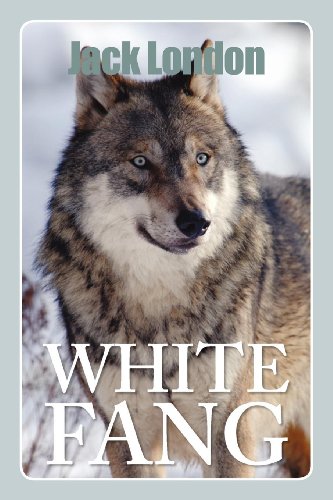
They can be considered exceptionally talented when they accomplish this with animals. Authors like Jack London have enthralled me like this with his most famous novels, Call of the Wild and White Fang.

Jack London’s Call of the Wild is the incredible story of Buck, the half St. Bernard half Sheepdog who is stolen from his comfortable California estate and sold as a sled dog in the Arctic.

It is first and foremost the story of his gradual transformation from a tame beast into a wild animal.
Told from Buck’s perspective, its often painfully realistic narrative provides us with a thorough understanding of the phrase “survival of the fittest”.

The moral, civilized Buck must adjust to the harsher realities of life in the frozen North. Kill or be killed is the only morality among the dogs of the Klondike.

Buck however is not content to merely survive; he wants to dominate.


London's portrayal of the brutality of life in the Yukon through the eyes of a mistreated part-wolf called White Fang is another riveting literary masterpiece.

His storytelling genius breathes life into the simplest natural occurrences. The images he paints of nature are harsh and cruel but true and beautiful. His mastery at drawing parallels between nature’s savagery and human cruelty is depicted in the struggle for survival for both man and beast.


London's prolific illustrations of the vast landscapes provide an ideal setting for White Fang’s character development.

Fang’s journey from cub to adult is fraught with physical peril from his venturing from the safety of the protective wall of the cave of his birth to discovering the undulations of the earth under his feet or the terror he experiences of total immersion in water. He realizes that things are not always as they appear.

As he struggles to understand the laws of his existence we are able to feel his emotional grief and turmoil when his mother is taken away. Because he sees that his very survival hinges upon understanding the laws of the “man tribes” that adopt him, he comes to understand the importance of strength and power.  It is because of this power that he regards men as “gods”, is trained as a sled dog and after relentless persecution by man and dogs becomes disciplined and solitary with superior intelligence and brute strength.

When finally he is adopted by a man who exhibits patience, compassion and affection, White Fang returns it in kind and quickly begins to understand one of the most important laws of man; the protection of his owner and the defense of his property.

As we witness Fang’s eventual domestication, London deftly illustrates that progression from nature to civilization requires violence at some point. At the same time he considers the extent to which both animals and humans are formed by their experiences in the world. Cruelty begets cruelty; kindness, kindness.

As with London’s own personal story of redemption from teenage hoodlum to married middle class writer, White Fang’s metamorphosis from savage wolf to devoted family pet exemplifies the struggle for survival while simultaneously searching for the love and compassion necessary for the development of a noble spirit.


Upon its release, White Fang was an immediate success worldwide. Although its appeal is especially popular among young readers and generally regarded as inferior to London’s companion work “Call of the Wild” it is still considered one of his most interesting and ambitious works and one that helped establish him as a popular American literary figure.


Tuesday, May 26, 2015

SHHHHHH   BE QUIET


We spend so much time talking. It always amazes me how much of our time is spent not really listening or hearing people. Most of the time we're waiting to interject our opinions.

Personally I enjoy listening. You can learn so much more. Not only do you learn what's useful but you also see what to reject.

The older I get the more discerning I've become about what to allow into my thought stream. This means that I can't be open to everything audible that is thrown my way. That means that I must be very diligent about really listening.

Let's face it, we're constantly bombarded with voices, sounds and noise from every direction.

Every electronic device and human voice is fighting for our attention. This requires us to develop very efficient filters and we can't do so if we're busy contributing to the problem. 

We have to shut up in order to be able to shut out what we don't want.

Most of the time, when we don't encourage the attention getters with the big mouths, they simply find somewhere else to go.

Let's learn to just be quiet and listen.


Oh by the way, be careful what you read too!


Thursday, February 26, 2015

REFLECTIONS ON BLACK HISTORY MONTH

Having worked in education for the past seven years, I have come to feel an intense discomfort about the month of February.

Since we have been given the opportunity to celebrate black history for an entire month, can't this time be better spent extolling the virtues and talents of other black luminaries such as the famous scientists, doctors, lawyers, and politicians that deserve the accolades they never received as well as Harriet Tubman, Rosa Parks, Martin Luther King and Malcolm X?

Don't misunderstand. Not for a moment am I minimizing the contributions they made to our people and history nor am I saying they are not worthy of the recognition they receive during this time.  However in most urban classrooms of color, these seem to be the only personalities that are taught as having made any kind of meaningful impact.

Yes, you might see the occasional poster of Ralph Bunche, Thurgood Marshall or Booker T. Washington. You might here a mention of Maya Angelou or Althea Gibson and lets certainly not forget the inordinate amount of time spent recognizing our black entertainers or sports figures. However not nearly enough time is spent on successful contemporary professionals that could serve to inspire particularly our male youth to become something other than NBA, NFL stars or rappers.

In addition to the usual historical figures, lets teach them about Lewis Howard Latimer who patented an improved method for the production of carbon filaments used in light bulbs without which Thomas Edison's bulb wouldn't have been as successful.

Let's not forget Charles Drew, a doctor and surgeon who researched and specialized in the field of blood transfusions and developed improved techniques for blood storage. Out of his work came the American Red Cross Blood Bank; George Washington Carver, a botanist and inventor that developed and promoted about 100 products made from peanuts such as cosmetics, dyes, paints, plastics, gasoline and nitroglycerin; Daniel Hale Williams, who performed the first successful pericardium surgery to repair a wound.

While we're at it, let's not forget the contributions of some our women that are rarely recognized such as Claudette Colvin who was actually the first person arrested for resisting bus segregation in Montgomery, Alabama before Rosa Parks or Roger Arliner Young who was the first black woman to receive a doctorate in zoology.

And although we may have taught our young girls about Mae Jemison, the first black woman to travel in space, let's not forget Bessie Coleman who probably inspired her because Coleman was the first black female pilot.

Let these be some of the names included in our bountiful history so that our young people are inspired to follow in their footsteps by studying math, science, literature, grammar, social studies as well as American and World History which will help them be successful in a rapidly changing, globally competitive environment.

The reflections on the horrors of slavery and the repetitive reminders of the Underground Railroad need to be told and have been told and beaten to death to the point where it is no longer informative to anyone, especially white America but looked upon with contempt and disdain as a means to only inflict guilt and shame instead of inspire compassion and regret. Our history should be told and incorporated into American history so that it is not only an annual celebration and a regular part of the educational curriculum in mostly black schools but all schools - white and black.

What bothers me is not that we have a Black History Month but that we've used it so pitifully over the years. It has become filled with the same sad ineffective clichés, especially in black academia. However the responsibility should not be exclusively that of educators but should be taught by parents in the home.

The late John Ogbu, Professor of Anthropology at Berkeley says in his book "Black American Students in an Affluent Suburb: A Study of Academic Disengagement" black students in the affluent homes of doctors and lawyers are looking at rappers in ghettos as their role models. Students talk the talk about what it takes to be a good student, but few put forth the effort required to get good grades. Ogbu believes that many black parents are not offering sufficient guidance, do not spend enough time helping with homework and do not pay adequate attention to their children's educational progress or entertainment habits.

Let's use this month to inform our people and particularly our youth about what can be done instead of not only what has been done by our people. Yes, it's an entire month and some may think it too long but since we've been granted this time let's use it more constructively and productively to improve our situations.

Wednesday, February 25, 2015

WHY I LOVE TO WRITE

Anyone that thinks writing is easy is either extremely naive or in denial. Yes, it is an expression of your thoughts at any given time and Lord knows it's the best form of really inexpensive therapy that I can think of, but it is by no means an easy endeavor especially if done with any integrity, intelligence or style.

I would love to say that I've spent most of my life writing something. That would be an incredible untruth. I've realized that there were many reasons that I was attracted to writing later in life than most. I think one of the biggest reasons is that it allows me to vent without being interrupted by other people's opinions. The older I get, the more things I have to get off my chest.

There are other more noble reasons as well though. I consider it a very personal, almost spiritual experience at times. It can sometimes feel like a pouring out of my very soul or a communication with the divine.

Of course by the time it leaves my mind and travels from my brain, down my arm, into my hand, through my fingers, onto my pen or a computer keyboard, it may have gone from being divine to demonic or at least somewhat defiled.

Depending on the topic, my mindset, the state of my health or my amount of sleep or a pending deadline, my writing experience can be as pleasant as a warm summer evening on a back porch swing nursing a cool cosmopolitan martini or as unpleasant as getting a root canal at the dentist's office.

Sometimes the ideas, feelings and words just flow and sometimes it seems I become mentally constipated.

In any case it's still the best way for me to communicate my true feelings because I'm not constantly interrupted by any other conversation other than what's going on inside my head. Of course sometimes that can become somewhat muddled and schizophrenic if I'm not careful. Either that or I have to fight the urge to get on my soap box and preach or teach or vent. That's when I really get dangerous.

I think what I enjoy the most about writing though is that I get time to review my thoughts and edit them before they are actually exposed to the light of day. I can put them on paper or on a screen and add or delete where I choose as opposed to being under the pressure of engaging in an active conversation where I can encounter differing opinions or possibly suffer from a severe case of "foot in mouth" disease.

What I love the most about writing is that it allows me to engage in conversation with my favorite person - someone that I love spending time with and whose thoughts, opinions and feelings I revere more than anyone else's.

ME.

Tuesday, December 30, 2014

Happy Holidays to everyone. I hope everyone had a joyous Christmas and are still enjoying the holiday season.

I know with the approaching new year, many of us are pondering ways to improve ourselves by resolving to do things differently.

Instead of casually or carelessly making the traditional "New Year's resolution" and finding we've totally lost interest, failed or forgotten what it was by March, let's try to make one that can carry more power and be more life changing than any we've ever made before.

Let's resolve to become more conscious of the thoughts we entertain and realize the more peaceful and positive they are, the better our chances of achieving our goals.

There is a saying that goes "Watch your thoughts for they become words, watch your words for they become actions, watch your actions for they build your character and watch your character because it becomes your destiny".

Here's hoping all of you have a wonderful, healthy, happy, safe and prosperous new year.

Thursday, December 4, 2014

I've just finished re-reading several Elizabeth Peters books. For those of you who are unfamiliar with her work, in my opinion she was one of the best mystery writers of my era.

Although her "Amelia Peabody" series may not be considered "classics", her stories are incredibly entertaining and her characters can stand toe to toe with anything Agatha Christie could create.

Amelia Peabody Emerson is a nineteenth century, well bred, intelligent, attractive and fearless female archaeologist. Her illustrious, impetuous and intellectually brilliant husband, Radcliff Emerson is described as being devastatingly handsome, wildly courageous and hilariously devoted to his wife and son.

Together while exploring the ancient pyramids and tombs of Egypt they discover intrigue, mummies and mayhem - the mayhem usually created by their equally brilliant, precocious and adventurous young son Walter Peabody Emerson, a.k.a. Ramses.

All of this is charmingly and elegantly written with incredible taste, humor and a must read for mystery fans everywhere.

Saturday, November 22, 2014

How many of us believe there is a book or short story or even a decent paragraph inside of us that is screaming to be released onto the written page.

I believe we all wish to share our innermost thoughts, desires, dreams, nightmares, fantasies, opinions in some form or fashion but hesitate for fear of harsh criticism or judgment. Let's face it, bearing one's soul is never easy and always quite risky.

But with writing, as with any art form, it is a risk we must be willing to take.

I personally have always felt I had some kind of story to tell. For that matter many types of stories to tell, lessons to teach, poems to be read by others, inspiring thoughts to be shared. I've only just recently realized how important it is to get it out of me into the light of day and not give a damn who does or does not approve of what I have to say and how I choose to say it.

I believe that's what makes an author exceptional. They must be fearless. For that matter, that's what makes any successful artist special.

However, we must be careful that fearlessness doesn't descend into foolishness.  Unfortunately today, too much of what we see attempting to pass itself off as art is just that, plain foolishness. It lacks taste, class, and intelligence. It does not inspire, inform or entertain.

This is that gray area where writers and artists must be careful not to bear too much of themselves and retain some self restraint and self respect. 

But this is the mark of true genius. Where one can meld the unconventional with tradition and make it magical.